

Andrew Field
For several years the conflict in eastern Congo has been discussed in one of two ways. It is either a security problem centred on Rwanda and M23, or a minerals problem centred on cobalt, copper and strategic supply chains. Both contain truth. Neither is adequate any longer.
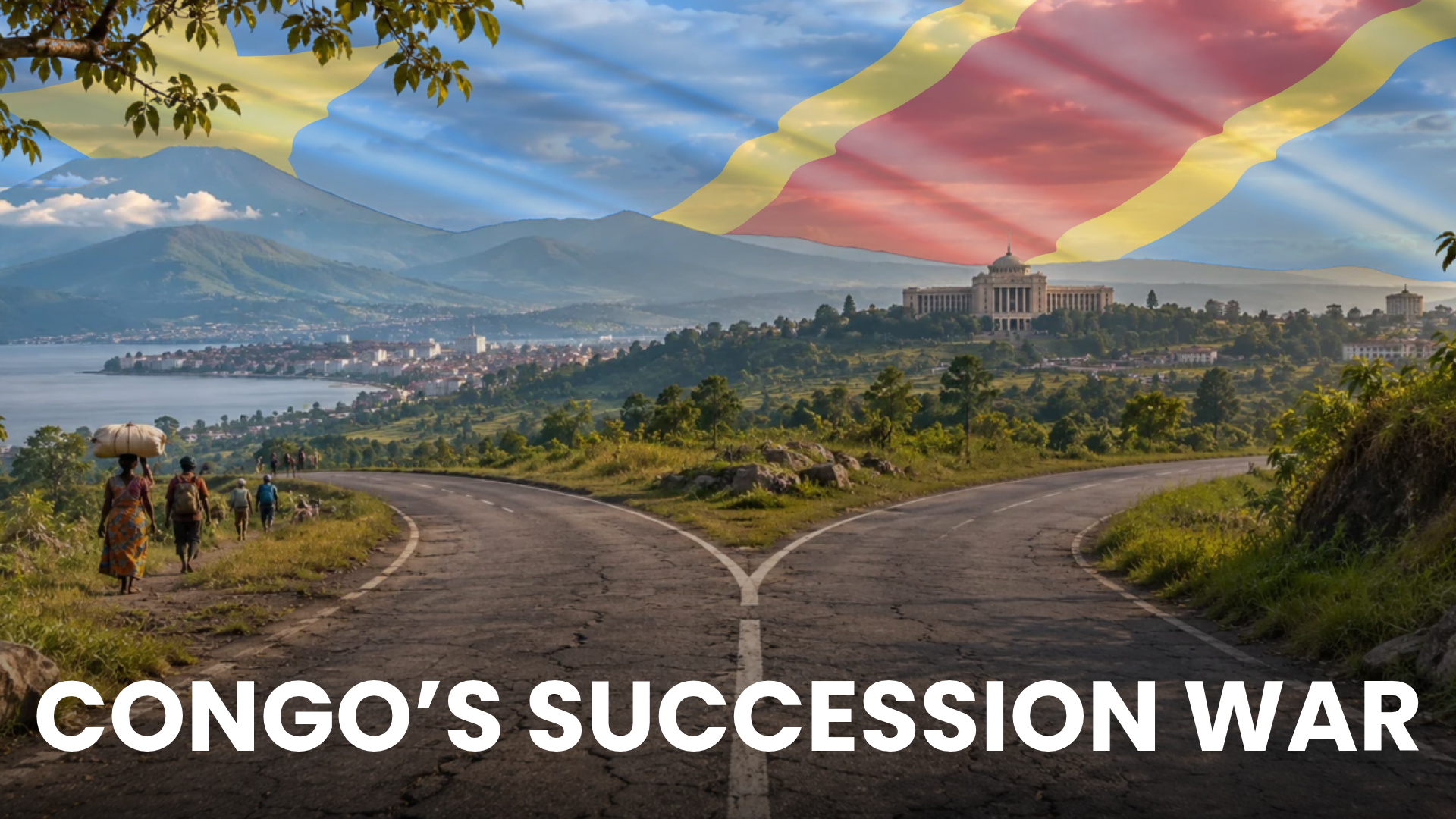
The emergence of former president Joseph Kabila at the head of the Front pour la Refondation de la Nation (FRN) suggests something more significant. What began as a rebellion in the Kivus is becoming entangled with political legitimacy, constitutional succession and the future of power in Kinshasa itself.
Eastern Congo has accumulated insurgencies, militias and political fronts with bewildering efficiency for more than three decades. Most arrive with ambitious rhetoric. Many vanish as quickly. The FRN matters not simply because it exists but because of who leads it.
Kabila governed the country for eighteen years and retains political networks and recognition few can rival. On 12 October, at his residence in Goma, he was proclaimed president of the new front, with senior AFC and M23 figures in its leadership and a stated intention to end “tyranny” by all means, including force. The FRN replaces the AFC/M23 alliance rather than merely joining it. Kabila is attempting what earlier eastern rebellions never managed, to turn a regional military challenge into a national political one.
The address matters. M23 has held Goma since January 2025, and it did not take the city alone. The UN Group of Experts and Western governments have documented Rwandan military support for the rebellion. Washington has imposed sanctions on Rwandan defence institutions and associated financial interests. Kigali denies supporting the insurgency. Kabila’s national ambition rests on military forces whose organisation and support extend beyond Congo’s borders.
This column must also own an error. In February 2025 it called M23 a criminal insurrection and “not a political player”. With substantial armed forces, its own provincial administration and a former head of state now leading the political movement that has absorbed it, that description is no longer adequate. M23 has become a political actor, although the distinction between Kabila’s political leadership and the movement’s military command remains important.
His justification is revealing. The FRN invokes Article 64 of the constitution, which obliges citizens to resist anyone who seizes power by force or exercises it in violation of the constitution. Congo, Kabila argues, needs fundamental reform if constitutional government is to survive.
The irony is hard to miss. His own final term expired in 2016, and the election to replace him was held two years late. The delay earned its own word, glissement, the slide. Protests against it were suppressed, with dozens killed, and constitutional purists were not conspicuous among his supporters at the time. It is tempting to dismiss his present argument as theatre, but politics is rarely that simple. A politician can argue from pure self-interest and still identify a genuine weakness in his opponent. The question is not whether Kabila believes his own rhetoric, but why it is finding an audience.
The answer lies in Kinshasa. President Félix Tshisekedi’s second and final term ends in 2028, and the constitution expressly protects presidential term limits against amendment. In May he said he was not seeking a third term but would accept one if the people wished it. He has also raised doubts about holding elections while large areas of the east remain under rebel control. Neither statement has reassured an opposition already suspicious of constitutional revision.
On 9 November Tshisekedi signed legislation establishing procedures for constitutional referendums. The measure follows earlier judicial consideration of the referendum framework and opens a route through which constitutional changes could be submitted to voters. Critics fear that an entirely new constitution might be used to reset the count of presidential terms. No constitutional referendum has yet been scheduled.
None of this proves a plan to remove term limits. But Africa has seen enough constitutional engineering to make voters sceptical. Leaders across the continent have discovered an enthusiasm for revision shortly before their limits arrive. Constitutions are political documents, not sacred texts, and countries amend them all the time. The trouble begins when citizens stop trusting the motive.
The government has not helped itself by warning of possible criminal consequences for politicians who associate with the armed rebellion. Nor has the dispute over participation in a national dialogue encouraged confidence that constitutional differences can be settled through negotiation. The danger is that legitimate political opposition and support for an armed insurgency become increasingly difficult to distinguish in the government’s response.
That suspicion gives Kabila his traction. Many Congolese have no wish to see him back, but they are equally unsure what a new constitution would produce. An unpopular messenger can still deliver a message that resonates. Opposition parties have themselves rejected both constitutional manipulation and any seizure of power by force, a distinction that neither side in the armed confrontation should be allowed to obscure.
Seen this way, the war looks different. Kinshasa claims to defend constitutional order against an insurgency. Kabila claims to defend it against a government he implies will slip its limits. Both invoke legality. Both accuse the other of threatening the republic. The FRN has warned that constitutional changes during the Doha negotiations could undermine the legal basis of the peace process, and has threatened to resist them.
Such arguments are the symptoms of a political system entering a succession fight. The constitution has become both the justification for retaining authority and the declared justification for challenging it. The approaching end of Tshisekedi’s mandate gives the dispute a timetable that the military conflict previously lacked.
Diplomacy has struggled to keep pace because outsiders read Congo through their own frameworks, regional security for some and mineral supply chains for others. Both are legitimate. But the men carrying rifles in the hills of Kalehe and Walungu are not debating battery supply chains. They are fighting over power, survival, territory and who may govern. Minerals help finance the conflict and give outside powers an interest in its outcome. They do not, by themselves, explain it.
The past year bears this out. The Washington peace accords of December 2025, accompanied by an economic agenda centred on strategic minerals, failed to prevent renewed fighting around Uvira. The Doha negotiations have produced agreements and frameworks without securing a durable cessation of hostilities. Washington has moved from mediation to sanctions against institutions it accuses of supporting the rebellion. The machinery of diplomacy continues to operate, but the fighting has not waited for it.
On 11 November the UN sanctions committee formally added the FRN as another name for the already sanctioned AFC. It was a recognition of the movement’s new identity, not a new settlement of the conflict. That same week, the front advanced towards the RN3 and reportedly captured Bunyakiri. Preliminary humanitarian assessments indicated that hundreds of thousands of people had fled fighting in Kalehe and Kabare within days. The political argument in Kinshasa was acquiring a substantial human cost in the east.
China has approached Congo through a different set of interests. While Western capitals issue sanctions and communiqués, Chinese mining companies including CMOC, Zijin and Huayou remain deeply embedded in the copper and cobalt industries. Beijing’s commercial position has been built over years of investment, financing and access to mineral production. It has little reason to abandon those interests because the political contest in Kinshasa has entered another phase.
Russia matters less in economic terms but deserves attention. Congolese and Russian officials met during the Russia-Africa discussions in Moscow at the end of October, against a background of Congolese dissatisfaction with the results of Western-backed mediation. There has been no publicly established military realignment. The diplomatic opening nevertheless illustrates how a government disappointed by one set of partners may seek alternatives without necessarily abandoning its existing relationships.
The region closest to the problem has been less effective than its earlier declarations suggested. In January 2025 SADC, then chaired by President Mnangagwa, promised a determined response to the M23 offensive. Its military mission was subsequently withdrawn. The organisation has offered little visible collective response to Kabila’s emergence at the head of the FRN. A community whose members have their own constitutional controversies may find a succession quarrel in Kinshasa an awkward subject.
Most African political crises eventually become succession crises, because the transfer of power is when institutions face their sternest test. Stable systems survive it. Fragile ones often do not. Congo has embarrassed too many confident predictions to invite another.
African politics can behave like a river in flood. For years the course seems settled. Then the water breaks a bank and cuts a new channel, and observers holding the old maps wonder when the landscape changed. The mistake is rarely a failure to observe. It is the assumption that the present arrangement is permanent.
A short time ago the discussion was about M23, Rwanda and minerals. Today a former president leads a political-military movement from rebel-held territory while the succession has become a national issue. Whether Kabila succeeds or fails is almost secondary. The conflict is no longer simply about the Kivus.
Until the question of who may govern after 2028 is settled, military victories will remain provisional, agreements will remain fragile, and outside powers will go on treating symptoms whose causes lie elsewhere. When both men claim to be saving the constitution, which of them is prepared to live by it?
Guest writer, Andrew Field, is the founder and author of the chronicle South of the African Equator and photoblog Simply Wild Photography
Discover more from Africa Unauthorised
Subscribe to get the latest posts sent to your email.
