

By Will Keys,
Humanity’s understanding of what constitutes “life” has always been narrowly framed by our earthly experience. We tend to define it through the lens of familiar biology: organisms that grow, reproduce, metabolize, and respond to their environment. Yet the transition from non-life to life was almost certainly far more delicate and mysterious than our textbooks suggest.
Consider the Ediacara biota – one of the earliest known assemblages of complex, macroscopic organisms on Earth. Discovered in the Ediacara Hills of South Australia (with related fossils found across ancient seafloors worldwide), these soft-bodied creatures date back approximately 575 to 541 million years, to the late Precambrian period. They represent some of the oldest evidence of large, structured multicellular life. Many Ediacaran fossils appear as quilted, frond-like, or disc-shaped impressions preserved in sandstone. Some scientists view them as sitting precisely on the blurred boundary between complex chemistry and the emergence of true biological life – organisms that may have operated with different metabolic pathways or body plans than anything alive today. They challenge our assumptions about what the very first “living” things looked like and how the spark of life ignited.
This delicate crossover from tangible chemistry to intangible life reminds us how fragile and contingent the definition of life truly is. If such a profound transition could occur once in the primordial oceans of Earth, why assume it was a singular miracle confined to our planet?
My perspective stops at the Milky Way galaxy. The broader universe, with its potentially infinite scale, lies beyond comfortable human comprehension. Within our own galaxy, however, the Darwinian “Tree of Evolution” that we revere as the full story of life is more accurately described as a tiny cluster of twigs on a small branch of a much larger evolutionary tree. The processes that gave rise to Earth’s biodiversity likely represent only one localized outcome among countless possible pathways.
DNA, or molecular systems functionally analogous to it, is almost certainly widespread across the Milky Way. The building blocks of life – amino acids, nucleobases, complex organic molecules – have been detected in meteorites, comets, and interstellar clouds. Given the sheer number of potentially habitable worlds in our galaxy (estimates often run into the billions), it seems not just possible but statistically probable that life has emerged repeatedly, following its own unique evolutionary branches.
Some of those branches have almost certainly led to supremacy. Superior alien intelligences visiting Earth would represent species that succeeded spectacularly in their own environmental and competitive contexts. There will undoubtedly be countless types of evolutionary intelligences. An encounter with beings whose morphology resembles a giant praying mantis, for instance, should not shock us. The fact that it is highly intelligent would be obvious but humanoids are unlikely to understand pray-mantic IQ. They, like us, would be products of iterative natural selection – honed for intelligence, tool use, and social coordination within their ecological niche. Such a meeting would be profoundly confronting for both parties, laden with mutual incomprehension and potential danger. Caution would be wise, just as we exercise caution around powerful or unpredictable animals on Earth.
Other reported encounters describe humanoid forms – beings with bilateral symmetry, limbs, heads, and expressive features broadly recognizable to us. This convergence on similar body plans across different worlds would reflect the constraints of physics and evolutionary utility: efficient locomotion, sensory concentration, and manipulative appendages often lead to parallel solutions.
Yet regardless of their appearance – mantis-like, humanoid, or utterly alien – all would likely share certain universal experiences as conscious beings: awareness of mortality, drives toward survival, perhaps even capacities for attachment, fairness, curiosity, or what we might loosely call “decency.” In my view, they are all part of the same grand creation. They are not invaders from some godless void, but fellow participants in a cosmic tapestry far richer than our limited terrestrial framework allows. We need to widen our overall vision.
The pivotal shift humanity must make is this: expand our definition of life from the parochial – Earth and our solar system – to the galactic. Once we genuinely internalize that life, intelligence, and complexity are not rare anomalies but probable outcomes across the Milky Way, then almost everything we currently dismiss as impossible becomes not only possible, but incredibly probable.
One example of cracked open public awareness came in 1989, when physicist Bob Lazar stepped forward in interviews with investigative journalist George Knapp. Lazar claimed he had been recruited to work at a secret facility called S-4, near Area 51 in Nevada, where his task was to reverse-engineer the propulsion systems of recovered extraterrestrial craft. The person who recommended Lazar was no other than Edward Teller. Lazar described nine flying discs of non-human origin. One he postulated was powered by an element (a stable form of element 115) unknown on Earth at the time, and detailed how these vehicles defied conventional physics through gravity manipulation. In later years Lazar changed his opinion and considered that it was more likely that a hitherto undiscovered sixth physics field force was the likely answer. Though met with scepticism and controversy, Lazar’s account—delivered with technical specificity—ignited decades of debate and thrust the reality of advanced non-human technology into mainstream consciousness.
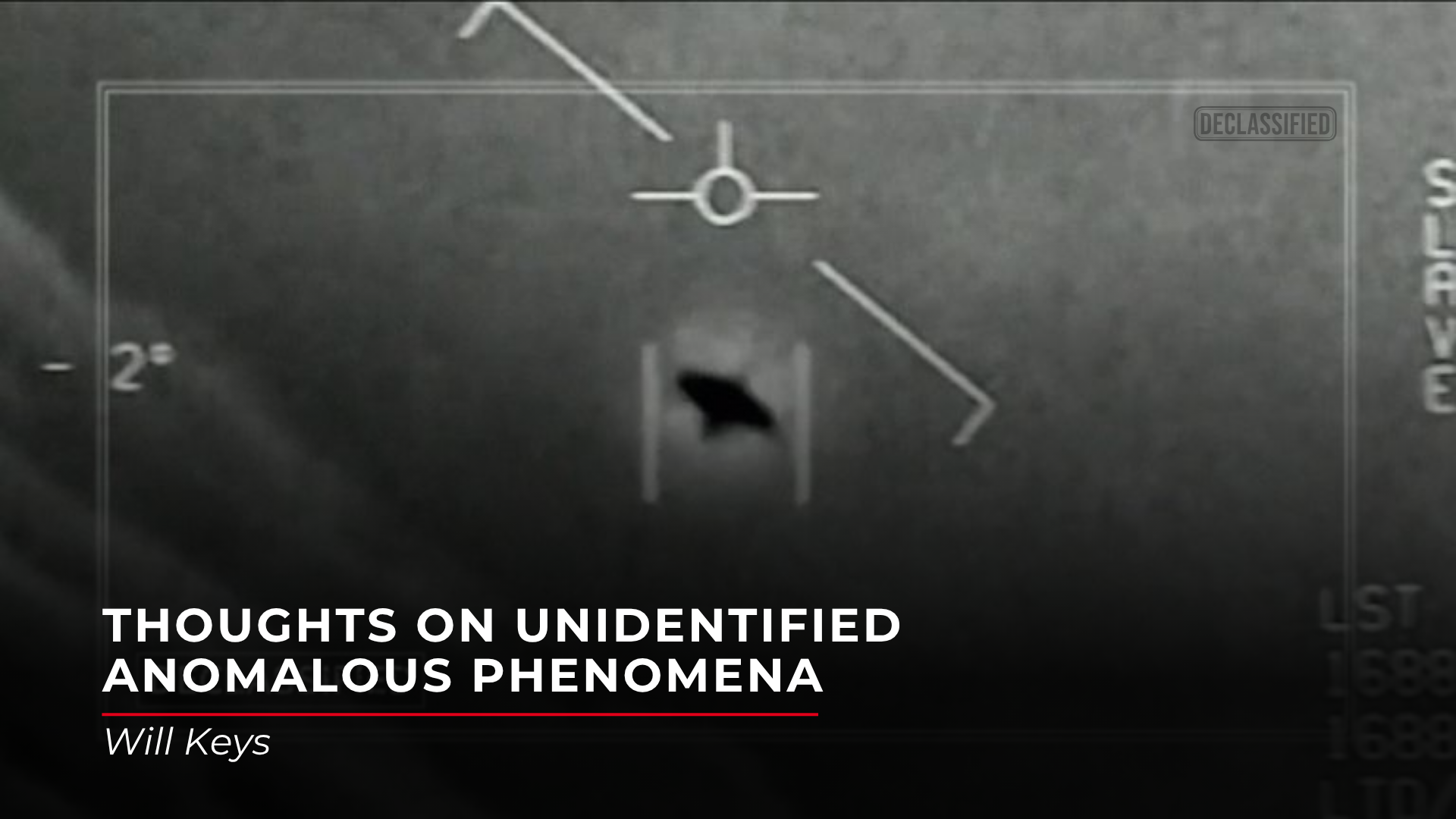
Fast-forward to the present: even President Donald Trump, long cautious on the topic, has recently directed significant government transparency efforts. In early 2026, Trump ordered the declassification and release of files related to unidentified aerial phenomena (UAP), extraterrestrial life, and associated matters, stating variations of “What the hell is going on?” and emphasizing the need for openness amid “tremendous interest.” These actions signal that the probable existence of extraterrestrial visitors is no longer fringe speculation but a matter worthy of serious official attention.
Mounting testimonies from credible sources reinforce this shift. Whistleblowers and insiders such as David Grusch, a former intelligence official specialising on the subject matter. He has claimed under oath, knowledge of multi-decade UAP crash-retrieval and reverse-engineering programs, including “non-human biologics.” Pilots like Ryan Graves and David Fravor (USAF) have described encounters with technology far surpassing human capabilities. Investigative journalists such as Ross Coulthart and researchers like Linda Moulton Howe have documented patterns across decades. Other names tied to this field—Robert Bigelow, Steven Greer, Richard Doti, and figures linked to programs like the Legacy Program—paint a picture of sustained, often compartmentalized government interest. It is now disclosed hat billions of tax-payers money has already been spent on the subject matter.
Historical incidents add weight. The 1980 Rendlesham Forest / Bentwaters event in England involved U.S. military personnel encountering a landed craft and strange lights near RAF Woodbridge, with radiation readings and official memos describing it as unexplained. Brazil’s 1996 Varginha (Arginha) incident featured multiple witnesses, including Carlos de Souza, reporting a crashed cigar-shaped object and biological entities, with claims of military involvement and a neurosurgeon’s alleged examination of non-human remains. Russia’s interest, including events at Kapustin Yar, and reports of captured entities like the storied “Ebe” alien held in captivity for years, reflect a global pattern. Additional cases, such as the Holloman AFB encounter and psychic/remote viewing programs exploring non-human intelligence. All further illustrate the breadth of inquiry.
CIA involvement in monitoring, disinformation, and investigation has been long suspected and partially documented. Teams exploring psionic capabilities and kinetic/physical evidence from encounters suggest these phenomena transcend mere lights in the sky. Earthly intentions have often been hostile.
Despite the apparent scale, keeping such secrets among humans has proven much easier than many assume. Compartmentalization, national security imperatives, and the sheer power of survival instincts—likely a galactic constant—enable extraordinary discretion and secrecy. When the stakes involve potential technological leaps, existential questions, or threats to societal stability, silence can be maintained across generations.
In the authors opinion, these threads—from Lazar’s pioneering revelations to today’s official movements—do not point to isolated hoaxes or misidentifications. They suggest a slow unravelling of humanity’s limited and malleable psychology. Superior intelligences, whether mantis-like or humanoid, are fellow creations navigating the same cosmic realities of fear, love, decency, and mortality. Acknowledging them requires us to enlarge our view of life from our small solar twig to the full galactic tree. Once we do, the probable becomes expected, and the universe reveals itself as far more alive and interconnected than we dared imagine.
By Will Keys
Discover more from Africa Unauthorised
Subscribe to get the latest posts sent to your email.

Will – fascinating article, fully concur
Thanks John. who knows where mankind will end up?
Thank you for a sane, intelligent discussion on this subject. Adamski, Erich von Daniken and other have been scoffed at because the humanbrain (conditioned by religeon) is too compromised to understand the possibility of other universes.
Hi Gerard, I agree with you and thank you for the kind words.