

Hannes Wessels,
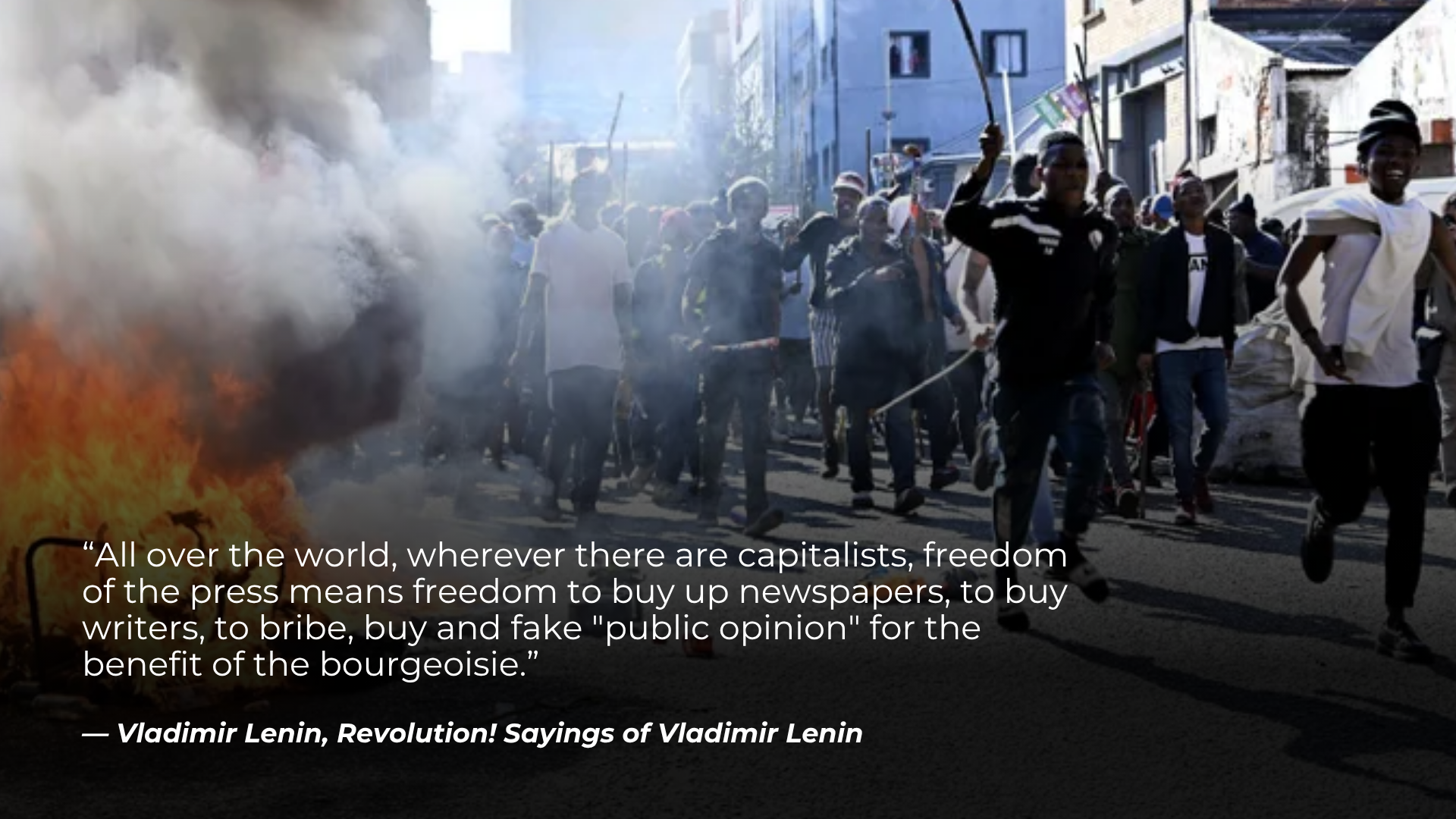
Witnessing the sad sight of South Africa convulsed by mass protests demanding the expulsion of foreign workers from the country, it is worth noting this problem has been building over many years.
In an interview over 40 years ago with the American writer, journalist and political commentator William Buckley, then South African Prime Minister John Vorster made some interesting points and some prescient remarks.
He pointed out that the country, despite being under sanctions, and considered an international pariah, was struggling to protect its borders and stem the flow of people fleeing newly independents states north of Limpopo where economies were collapsing as a result of civil war, political turmoil, and poor governance.
Of course the world never heard this side of the apartheid story, all they were told was Vorster presided over a living hell for black people, where rich whites routinely oppressed poor blacks and when they behaved badly, the ‘Sharpeville Massacre’ was rolled out as an example of the sort of rough justice visited upon the beleaguered majority.
Despite the hostility of the world, and the fact that he was then portrayed as one of the leading villains of the era, in the interview, Vorster talks empathetically about the plight of the foreigners and laments the failures of the polities under newly independent rule that have caused the exodus.
One example he points to is Malawi as he explains that almost 100,000 of the country’s nationals are in the country and while he would prefer them not be, he understands why and wishes them no harm. He then goes on to warn this is a burgeoning problem as African populations grow rapidly while their economies decline making it impossible to provide employment for much more than a small minority of the citizenry.
This interview took place before the accession to power in Mozambique of Frelimo led my Samora Machel. Following a hardline Marxist economic blueprint, he wasted no time in making it clear to the Portuguese colonists that they were unwelcome and most fled, collapsing the economy. That in turn, triggered the exodus of tens of thousands of black workers who made their way west to the neighbouring economic powerhouse.
One wonders if Mr. Vorster, in his most pessimistic view would have imagined the scale of the problem that has subsequently come to pass with millions of impoverished sub-Saharan Africans fleeing north to Europe and south to South Africa in an unstoppable human tide with no solution in sight. But in the case of South Africa let it not be forgotten, it was President Thabo Mbeki that provided the catalyst for the current crisis engulfing his country.
Twenty-five years ago Mbeki was earning accolades around the world touting his New Partnership for African Development Plan (NEPAD) which was designed to transform the continents fortunes by encouraging African leaders to follow policies that would yield accelerated home-grown economic growth which would follow the implementation of true democratic standards leading to good governance.
To ensure compliance with the lofty standards aimed at, an ‘African Peer Review Mechanism’ was to be introduced that would ensure compliance with international political, economic, and corporate governance standards. At his side extolling the virtues of Mbeki the man and his plan was the venerated American economist Professor Geoffrey Sachs who was then playing a pivotal advisory role in trying to reduce African poverty. This initiative, if followed offered real hope to millions of poor people and attracted the optimistic attention of players in the public and private sector around the world.
Unfortunately while this high-minded vision for the future was being rolled out, Zimbabwe’s President Mugabe, in a fit of political pique, decided to engage in a campaign of ethnic cleansing aimed at his white compatriots in general, but the farming community in particular.
For Mbeki and his acolytes the first test of their commitment to the principles they had been so eruditely espousing was proffered. To pass the test and retain any semblance of credibility they would surely have to censure the Zimbabwean leader and use the means at their disposal to halt this egregious violation of the most basis human rights.
Unfortunately for Zimbabwe, South Africa, and the sub-continent we discovered that for Mbeki, the dislike of white people he shared with his friend Robert Mugabe, trumped all his grand designs and he quickly endorsed the land confiscation plan. This decision, based entirely upon racial prejudice, brought almost immediate economic collapse leading to the mass exodus of, by some estimates, three-million economic refugees who made their way to South Africa and helped cause the crisis engulfing the country today.
Looking at the numbers and the bleak prospects for economic growth in the region and the continuing rapid population growth, there appears to be no chance of any sustainable solution to this chronic malaise. Mr. Vorster famously once said the future for southern Africa was ‘too ghastly to contemplate’ if blacks and whites did not find workable solutions. Unfortunately they did not, and the future does look ghastly.
Discover more from Africa Unauthorised
Subscribe to get the latest posts sent to your email.

HANNES; Strange is it not, that both Vorster and Smith were classed as international pariahs, BUT, the words spoken by both of them, proved to be so correct, many decades after they had left this Earth ??
IRONY IS IT NOT ???