

By Andrew Field
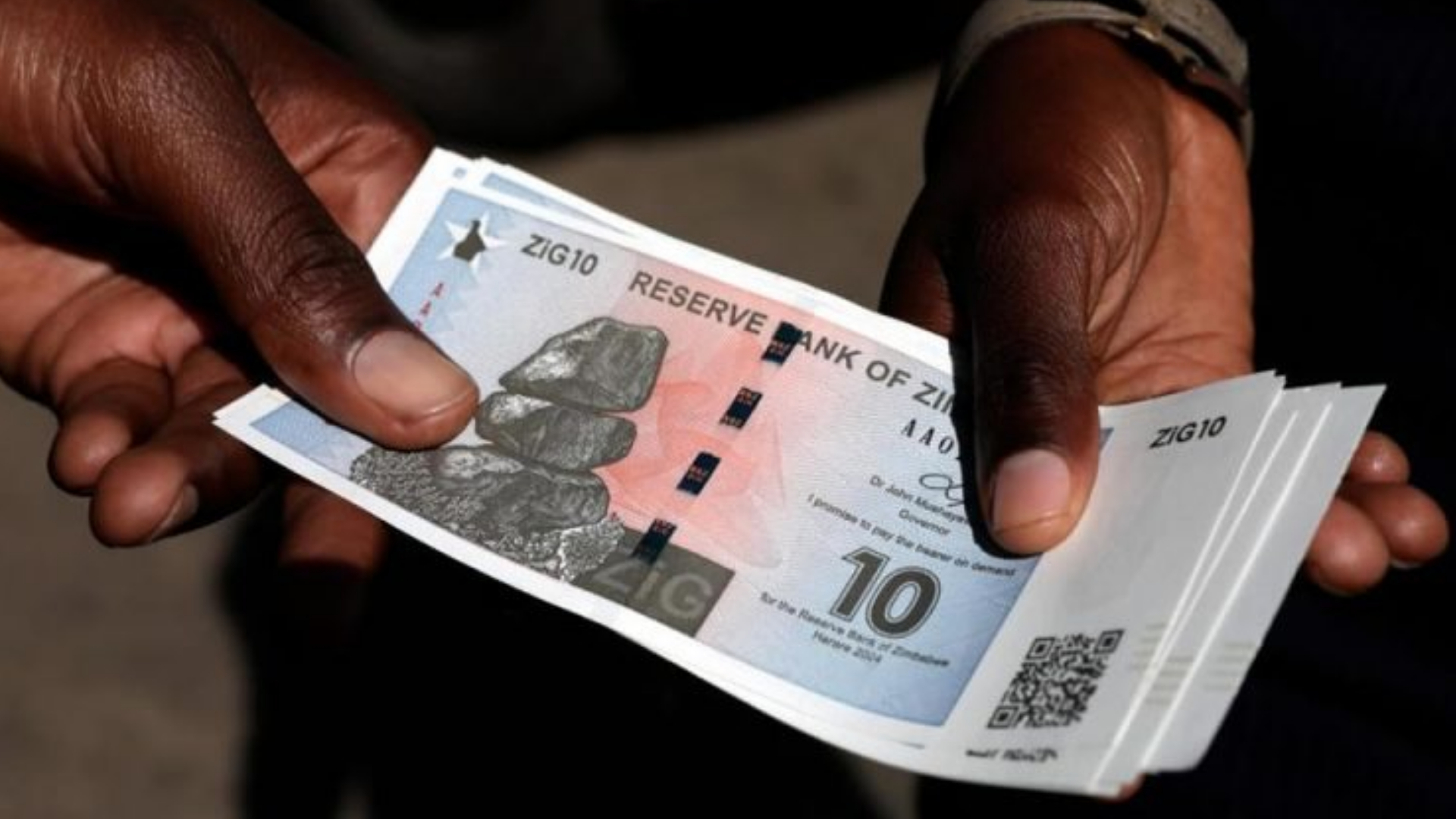
Zimbabwe’s currency looks calm on the surface, but beneath it, the currents of mistrust run deep. There is a tendency within government to treat the apparent stability of the Zimbabwe Gold (ZiG) dollar as evidence of policy success, yet this conclusion rests on a shallow reading of how exchange rates are formed and sustained in constrained systems. The ZiG has exhibited nominal stability against major currencies, particularly the United States dollar, but price stability is not synonymous with value stability. In a controlled monetary environment, that distinction becomes critical. Stability without confidence is an illusion.
The relevant question is not whether the exchange rate has moved, but whether it reflects an unconstrained equilibrium between supply and demand for foreign currency across the full spectrum of economic actors. In the Zimbabwean case, the answer is plainly negative, and the consequences of the gap between the observed price and the underlying value are beginning to manifest in more subtle but ultimately more corrosive ways.
In a conventional open economy, the exchange rate is the outcome of competing forces rooted in the balance of payments. Trade flows, capital movements, expectations, and relative inflation differentials interact continuously to produce a price that clears the market. Participants are free to transact, arbitrage is permitted, and information is rapidly incorporated into pricing decisions.
Under such conditions, the exchange rate performs a signalling function, conveying information about scarcity, risk, and confidence. It is precisely this signalling role that is compromised when administrative controls restrict participation, suppress alternative pricing mechanisms, and penalise deviation from an official rate. The resulting price may be stable, but it is not necessarily informative and may, in fact, obscure the imbalances it is meant to reveal.
The Zimbabwean framework presents itself as a willing-buyer, willing-seller system operating through authorised dealers, yet the institutional context in which this mechanism operates materially alters its character. Access to foreign currency is neither universal nor frictionless, enforcement measures discourage the use of alternative reference rates, and the parallel market, historically a key source of price discovery, has been driven into opacity rather than eliminated. Under these conditions, the interbank rate ceases to be a true clearing price and instead becomes a managed outcome within a constrained corridor of permissible transactions. The appearance of market determination is retained, but the substance is diluted, and the resulting exchange rate reflects policy boundaries as much as economic fundamentals. The ZiG does not float; it is carried, like a patient on a stretcher, by administrative controls.
Beneath these mechanics lies a more fundamental issue, namely, confidence in the State itself. Monetary systems are expressions of institutional credibility. A currency is not merely a medium of exchange; it is a claim on the discipline and consistency of the issuing authority. Where that authority has a history of abrupt policy shifts, enforced conversions, and retrospective alterations to value, the currency inherits that history in full. Zimbabwe’s monetary past is neither distant nor abstract.
The enforced one-to-one conversion (2008) associated with the transition to the RTGS framework, following the hyperinflation years, marked a moment of profound value destruction for holders of local balances. Economic agents who had accumulated assets under one set of expectations found those expectations unilaterally reset. The technical justification for the measure is less important than its psychological consequence, which was to embed a durable scepticism toward any declared parity or official valuation.
It is in this context that current claims of stability must be assessed. Even where policy discipline appears to have improved, and volatility has been reduced, the credibility deficit remains a binding constraint. Economic actors do not evaluate the ZiG solely on present indicators; they evaluate it through the lens of past experience. The operative question is therefore not simply whether the currency is stable today, but whether it will be allowed to remain stable tomorrow. That uncertainty cannot be removed through regulation, and it feeds directly into expectations, pricing decisions, and the willingness to hold local currency beyond immediate transactional needs.
This distinction matters because economic agents do not rely solely on official prices when forming expectations. Where access is restricted and enforcement is active, participants develop internal benchmarks based on perceived scarcity, historical experience, and informal information flows. These perceptions may diverge significantly from the official rate. The result is the emergence of a dual-pricing consciousness, in which transactions are conducted at the official rate while decisions are informed by an alternative, implicit valuation. This divergence does not immediately manifest as an overt exchange-rate movement, but it exerts pressure through other channels, most notably the pricing of goods and services.
It is within this environment that the policy requiring government contracts, including the settlement of arrears, to be denominated and discharged in local currency assumes particular significance. In principle, the use of the domestic currency for public-sector obligations is standard practice. In practice, when implemented in an environment of constrained convertibility and uncertain valuation, it constitutes a transfer of currency risk from the State to the private sector. Contractors who entered into agreements under different expectations, or who rely on foreign currency inputs, are compelled to absorb the risk that the ZiG may not retain its purchasing power relative to the US dollar over the relevant time horizon.
Rational economic behaviour in such circumstances is both predictable and unavoidable. Firms will seek to protect their margins and balance sheets by incorporating a risk premium, an additional margin to compensate for expected currency loss, into their pricing structures. This premium reflects not only current discrepancies between official and perceived exchange rates, but also the anticipated probability of future adjustment. Pricing, therefore, becomes forward-looking rather than reactive. Instead of responding to observed depreciation, firms pre-empt it by adjusting prices upward in advance, embedding expectation directly into cost structures.
This mechanism introduces a layered structure to pricing within the economy. The first layer is the official exchange rate, which governs formal transactions and accounting conventions. The second layer is the implicit or shadow rate derived from market perceptions and informal benchmarks. The third layer is the aggregation of risk premia that economic agents apply to compensate for uncertainty, convertibility constraints, and policy unpredictability. It is this third layer that generates hidden inflation. Prices rise not because the official rate has moved, but because that rate’s credibility is not fully accepted.
The implications extend beyond individual contracts to the broader fiscal position of the State. By enforcing local currency settlement, the government may achieve a short-term reduction in its demand for foreign exchange, thereby easing pressure on official reserves. However, the compensating increase in contract prices driven by embedded risk premia effectively raises the real cost of public expenditure. The State pays less in foreign-currency terms at the point of settlement but more in real-resource terms over the life of the contract. This represents a form of deferred adjustment in which immediate pressure is alleviated at the expense of longer-term efficiency.
Moreover, the imposition of local currency settlement alters supplier behaviour in subtle but important ways. Firms shorten pricing horizons, demand shorter payment cycles, and become reluctant to enter into long-term contracts. In some cases, economic activity shifts into less regulated channels where pricing better reflects perceived value. These responses reduce the depth and quality of participation in formal markets, further weakening the informational content of the official exchange rate and reinforcing the cycle of managed rather than discovered pricing.
These outcomes do not arise from misunderstanding or irrationality. They reflect informed and adaptive behaviour in response to a constrained policy environment. Zimbabwean economic agents are experienced in navigating currency risk and are highly sensitive to signals of misalignment. Where direct challenge is discouraged, adjustment takes place through pricing, contract structure, and economic allocation. The system evolves in a manner that preserves formal compliance while embedding informal hedging strategies.
The notion that stability can be engineered through control rather than earned through confidence is not unique to Zimbabwe, but its effects are particularly pronounced in an economy with a history of monetary disruption. Confidence in a currency derives from the expectation that it will retain value over time and remain usable without restriction. Where these conditions are only partially met, the currency circulates, but with an embedded discount that manifests indirectly through pricing behaviour and asset preference.
The current configuration of the ZiG system suggests that stability is being achieved through tight liquidity management, administrative discipline, and suppression of alternative pricing mechanisms. These tools can reduce visible volatility, but they do not address the underlying determinants of value, namely external balances, fiscal credibility, and market confidence. In the absence of progress on these fundamentals, stability risks become a surface phenomenon masking accumulating pressures beneath.
Those pressures are unlikely to manifest immediately as a dramatic adjustment in the official exchange rate. More often, they emerge through gradual erosion of purchasing power, widening gaps between official and perceived values, and increasing defensive behaviour. The system continues to function, yet efficiency and transparency deteriorate over time as confidence fails to keep pace with policy.
The effectiveness of exchange rate policy cannot be assessed solely by reference to the rate itself. One must examine the broader ecosystem of behaviour that surrounds it. Are prices stable in real terms, or drifting upward despite nominal stability? Zimbabwe’s inflation statistics appear controlled in outcome, if not in process, with many economic actors placing greater weight on observed price movements than on published figures. Are contracts shortening, and what does that imply about expectations? Are participants willing to hold local currency, or do they convert at the earliest opportunity? These questions speak directly to confidence, and it is confidence that ultimately determines whether a currency is held, avoided, or hedged.
The insistence on local currency settlement for government obligations therefore serves as both a test and a signal. It tests the willingness of the private sector to absorb currency risk, and it signals the extent to which the State relies on administrative measures to sustain demand. If the valuation of the ZiG were widely accepted, such measures would be unnecessary. The fact that they are required suggests that confidence remains conditional, shaped as much by historical experience as by current policy.
It would be incorrect to conclude that the ZiG experiment is without merit. There has been a measurable reduction in volatility, and the introduction of structure represents an improvement over previous disorder. However, the durability of this stability will depend on whether the system can transition from a control-based equilibrium to a confidence-based equilibrium. That transition, in turn, depends not only on monetary discipline but on institutional separation and credibility. In other words, one has to ask, if the ZiG were truly trusted, why must the State compel its use?
Where the central bank and fiscal authorities operate within the gravitational pull of party political priorities, monetary policy risks becoming an extension of political narrative rather than an instrument of economic management. In such a setting, currency valuation is no longer anchored solely in fundamentals, but in the imperatives of the prevailing political framework. Until that Rubicon is crossed, and monetary authorities are perceived as independent, consistent, and insulated from political expediency, the exchange rate will remain an observed figure rather than a fully trusted signal, and the economy will continue to price not only what is, but what it fears may yet occur.
Guest writer, Andrew Field, is the founder and author of the chronicle South of the African Equator and photoblog Simply Wild Photography
Discover more from Africa Unauthorised
Subscribe to get the latest posts sent to your email.

Thanks Andrew – Subject of ZiG
I was in Zim a few weeks back, flew into Hurri-hurri then by road down to FV (masvingo.) Stayed in an “upmarket” hotel, at the invite of one of the owners who told me that they dont use ZiGs, at all. Everything is in US$. No-one trusts local cash, even the peasants living in Harare, and he said that they dont have bank accounts, storing their cash valuables under the mattress. Many black folk (and presuming white folk too) barter which gets hidden in financial circles.
On a side note, as I was leaving for the airport, it suddenly dawned on me, the startling difference between SA and Zim. I saw no hatred there. Nor any anger. I felt safe, sort of.