

By Will Keys
In every functioning democracy there is an expectation—quiet, steady, almost instinctive—that public watchdogs operate above fear, favour, and fashion. Their legitimacy does not come from popularity but from integrity. Their mandate is not shaped by public mood but by the law.
This story begins, however, not with institutions, not with watchdogs, not with courts or commissions, but with an ordinary Brisbane household on an ordinary suburban night.
The Baden-Clay family were not outsiders. They were respected, well-liked, and firmly embedded in the life of Queensland. Nigel and Elaine Baden-Clay were people of restraint and manners, of the old understanding that one carries oneself with dignity, that one does not shout or strike or collapse into chaos. Like many ex-Rhodesians who remade their lives in Australia, they were deeply committed to Australiana. They belonged. They contributed. They were entrenched in their adopted country.
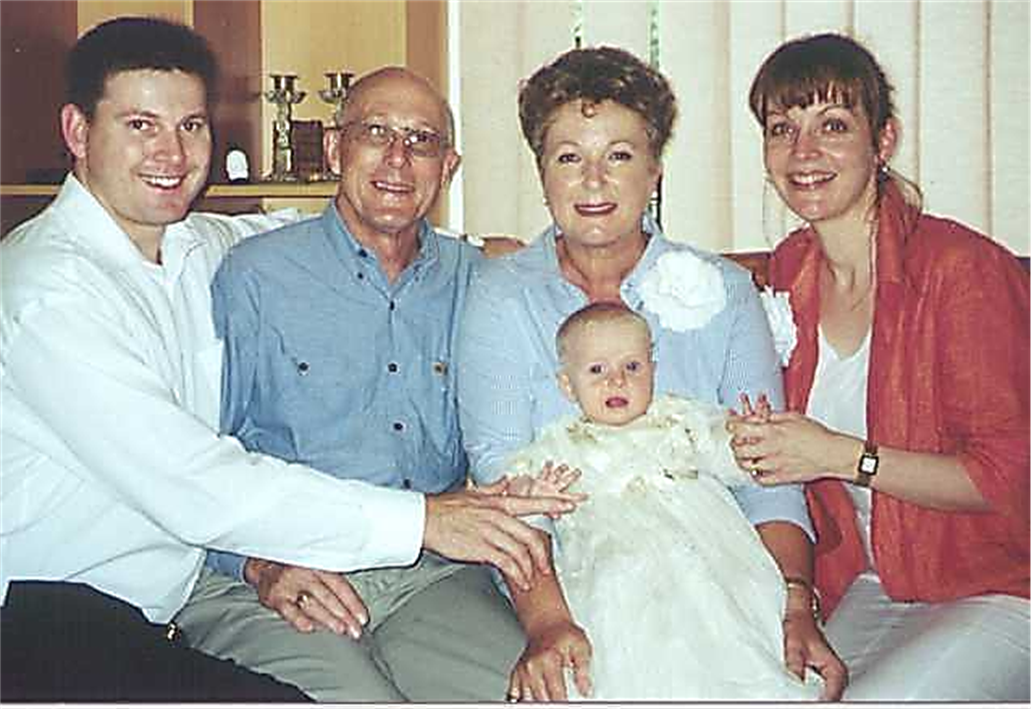
What has befallen them is beyond tragic.
Allison Dickie, Gerard’s wife, was intelligent, educated, capable. Raised in the working-class suburbs of Ipswich, she understood early that life offers different starting lines. She was ambitious without vulgarity, proud without arrogance, determined to build a life of meaning. When she met Gerard Baden-Clay she believed she had found love and possibility. He was charming, articulate, outwardly secure. They married. They had children. They built a family.
But life does what it always does. Responsibility multiplies. Domestic burdens settle, as they so often do, more heavily upon the wife. And then came the slow corrosion of betrayal. Gerard’s infidelity emerged not through candour but through fragments, through discovery, through humiliation that is sharp precisely because it is incomplete.
Allison was not theatrical. She carried hurt quietly. The Baden-Clay method was to smooth, to defer, to carry on. The intolerable was tolerated because rupture seemed worse.
By the evening of 19 April 2012, that quiet endurance was under severe strain. The next day Allison was expected to attend a real-estate conference. Gerard’s paramour would be present. The thought weighed heavily as the night wore on.
But nothing dramatic erupted. The television played. The house settled.
At around 10.00 pm Gerard went to bed. He left Allison in the lounge room, watching television. That detail matters precisely because it is unremarkable. It speaks of domestic quiet, not crisis.
Later Allison changed into her running clothes. She was a runner. Running was her release, a way of quieting the mind through movement. The road asked no questions. It judged no one. It simply unfolded beneath the feet.
She ran down Brookfield Road toward Rafting Ground Road.
And she never returned.
In the days that followed, Brisbane searched. Police established a command centre. Fear spread. Then grief. Allison’s body was later found beneath the Kholo Creek Bridge, some fourteen kilometres from the family home.
Gerard Baden-Clay was charged.
The public mood hardened quickly. Queensland wanted certainty. The media supplied it. Gerard Baden-Clay’s character was pulverised long before any jury was empanelled. The case became not merely a prosecution but a moral narrative.
David Murray later wrote The Murder of Allison Baden-Clay – All Marriages Have Their Secrets. The book stands as part of the cultural landscape surrounding the case — not because journalism is proof, but because it illustrates how swiftly a tragedy becomes a fixed artefact of public storytelling.
In 2014, Gerard Baden-Clay was convicted at trial of murder. He received a sentence of life imprisonment. The sentencing judge expressed the gravest possible view of his credibility and recommended that any parole authority keep firmly in mind the judge’s assessment of his character.
Gerard Baden-Clay maintained that he did not murder his wife.
The case went to the Queensland Court of Appeal. In 2015, the Court of Appeal set aside the murder conviction and substituted a conviction for manslaughter, holding that the evidence did not establish murder in the manner required.
Queensland reacted with fury. The case had become public certainty. The prosecution appealed to the High Court of Australia.
Later in 2015, the High Court reversed the Court of Appeal’s decision. It held that the Court of Appeal had erred in substituting manslaughter and restored the conviction for murder. The life sentence was reintroduced.
In law, that is where the matter rests.
But what remained was institutional disquiet: the spectacle of a conviction reduced, then restored; the sense of courts themselves struggling within a climate of overwhelming public certainty. This is not the calm, dispassionate standard of justice Australians ordinarily believe we enjoy. It left unease.
Years passed.
Gerard Baden-Clay remained in prison.
Nigel and Elaine Baden-Clay aged under the weight of waiting.
And then, thirteen years into that life sentence, something extraordinary occurred — not in a courtroom, not in a commission office, but in ordinary life.
During a group cycling outing, among women speaking casually, a conversation arose. One woman mentioned, off-handedly, that she had seen Allison Baden-Clay running late at night on 19 April 2012, near the Brookfield Store.
“I went cold,” she said. “She was running at a pace that was a definite run with determination.”
She had reported the sighting at the time, more than once, to police officers attached to the Brookfield command centre. She had not embellished. She had not speculated.
“I know what I saw,” she said.
The conversation was overheard by a retired solicitor, an ex-Rhodesian migrant who understood institutional inertia and the fragility of justice.
That solicitor was Will Keys.
At first the statement seemed merely curious. But it turned serious when the witness would not resile. “I saw her,” she insisted.
Keys recognised immediately what it meant.
Not proof.
Not exoneration.
But doubt.
And doubt, in a just society, is not an inconvenience. It is a duty.
He passed the information directly to the Baden-Clay family.
That moment — quiet, accidental, providential — became a hinge upon which the re-examination of this case began.
And as often happens when one honest piece of information is taken seriously, other anomalies long buried beneath narrative began to surface. There were suggestions of unexplained electronic communications. There was the report of an anomalous “confession” email, bizarre and likely false, yet significant because anomalies do not arise without cause. There were questions surrounding Allison’s unrecovered phone, and alleged tower activity the following morning associated with Fig Tree Pocket — matters that require proper forensic anchoring, not dismissal.
Most serious of all was the disclosure question. A fair trial depends upon the proper disclosure of relevant material, including material capable of assisting the defence or undermining the prosecution case. When serious questions arise about whether potentially exculpatory material was properly ventilated, the system’s only honourable answer is transparency.

And here the story turns squarely to the watchdog.
In Queensland, the Crime and Corruption Commission, formerly the Crime and Misconduct Commission, exists to guard against institutional failure. Its mandate is not to align with mood or media but to insist upon integrity of process.
Yet in the Baden-Clay matter, it is arguable that the Commission fell short.
This is not said lightly, nor in anger. I have had no contact with Gerard Baden-Clay. All contact has been through his parents. My concern arises from what I have uncovered, what I have sought to verify through sworn material, and what I have discussed with Michael Byrne KC, one of the most senior members of the original defence team.
On the account available to me, there are disturbing questions about coercive secret processes involving the family, and about institutional silence in the face of exculpatory strands. A watchdog worthy of its name does not ignore such matters. A watchdog is not a lapdog. Its duty is not to protect narrative but to insist upon process.
Readers must understand that the zeitgeist in Queensland remains corrosive. The prejudice, the poisonous certainty, the hostility toward scrutiny, has not dissipated. I write this with hesitation. I suspect the penning of this Op-Ed could do me harm.
But I demand decency of myself.
And I respectfully request that readers consider being decent also.
Decency does not require agreement. It requires fairness. It requires the maturity to accept that justice is not weakened by scrutiny, but strengthened by it.
What is being asked is not theatre, not mercy, not press release.
It is a judicial process.
A transparent setting where the witness evidence can be tested, where the electronic anomalies can be traced, where disclosure integrity can be examined, where these matters can be either confirmed or disproved by proper means.
If the evidence stands, justice demands recognition.
If it fails, justice demands the clarity of its failure.
Either outcome is better than silence.
The ancient maxim applies: Fiat justitia ruat caelum — let justice be done though the heavens fall.
If you have read this far, I ask one thing only: forward this Op-Ed to your friends, and make the same request — that whatever their view, they approach this matter, and all matters of justice, with restraint, humility, and decency.
Because a society that cannot ask questions without rancour is not a society confident in its justice.
It is a society afraid of it.
By Will Keys
Discover more from Africa Unauthorised
Subscribe to get the latest posts sent to your email.

Sadly in many counties the ideal of “blind justice” is being eroded by either political ends, clicks/views by the media or judicial incompetence. I pray that this family will see right done for them
Hi Gary, your comment is extremely welcome and we agree wity you entirely. I reiterate that we are not arguing guilt or innocence, the verdict in the Baden-Clay case has been handed down after a trial, and is the now recorded law. We are arguing that Gerhard Baden-Clay did not get a fair trial. There was exculpatory evidence known to the police that was not disclosed to the defence team. The exculpatory evidence was of such significance that had it been disclosed and argued before the jury, it may have resulted in a diffrerent verdict. This is not just my opinion, it is also the opinion of Michael Byrne QC.
Here is a link for people who don’t know anything about the murder of Mrs Baden -Powel. There is photos of him with scratches on his face and neck apparently caused by shaving. he said. I think you will be maybe make your own opinion.!
https://au.search.yahoo.com/search?type=E210US91214G0&p=bayden+clay+murder
Hi Don, thanks for the comment. I hope you appreciate that if the exculpatory new witness evidence, if accepted as true then all the circumstantial evidence put forward and relied on by the prosecution is of NO probative value. Please keep the above in mind. If what the witness saw, that is to say, Allison out running on the relevant date, time and place then the prosecution case collapses in toto. I hope Channel Seven also broadcasts the exculpatory new evidence please ask them to do so. Believe me, the new witness evidence is impeccable and for the sake of DECENCY and JUSTICE must be tested in court.
I was a litigation attorney in South Africa for 40 years. I did thousands of trials, most of them criminal, until the arrival of the new regime resulted in a tailing off of arrests and resultant trials. I then began concentrating mostly on civil litigation.
I have personally witnessed hundreds of miscarriages of justice. Some were my cases but many were those involving my colleagues.
“Convictious” magistrates were the source of many such miscarriages. Many accused who should have been acquitted were convicted. Not all were “innocent” but if the civilized rules of justice were properly applied they should have been acquitted. Those rules are what separate civilized well-developed Western justice systems from primitive ones.
Another cause of convictions which should have been acquittals and harsh sentences which should have been light ones were the personal prejudices of the presiding officers.
Lastly, the crooked press and so-called “social justice” pressure groups exerted influence over the decisions of judicial officers who should have had the testicular fortitude to resist. Some days I read a report in the newspaper which supposedly dealt with a case I was dealing with containing “facts” that were either intentionally incorrectly reported (in many cases) or were at best reported with reckless disregard for the actual evidence presented at the hearing.
Hi Roger, what a pleasure to read your comment. I quote you “Those rules (Criminal and Civil Procedure) are what separate civilized well-developed Western justice systems from primitive ones.” So, very true. If you know anyone in Australia please direct them to my article. The zietgeist in Brisbane is jaundiced against Gerhard Baden-Clay.
Hi Will
This is a fascinating story which sounds like there has been a case of ‘guilty by public opinion’ with some convenient facts being omitted, in order to get a conviction. Your approach to decency is top notch, a lesson for us all. Keep up the great work.
Hi Nick,
Yours is the first reply, I’m hoping there will be more. Jacki and I had a catch-up coffee session with Elaine and Nigel Baden-Clay (the parents) this morning. They are a lovely couple. We discussed the Brisbane zeitgiest and commisserated about a bygone era. Nick, I take the opportunity to reiterate what I said this morning. We accept the juries decision and accquiesse to the system of justice in Queensland. Our complaint in based upon compulsory new evidence that was denied to the Defence team. We ask only that the compulsory new evidence be tested by a court and a decisioin made. Because we have ‘no standing’ our words are just that Not a single institution has deignee to even answer our submission.