

Andrew Field,
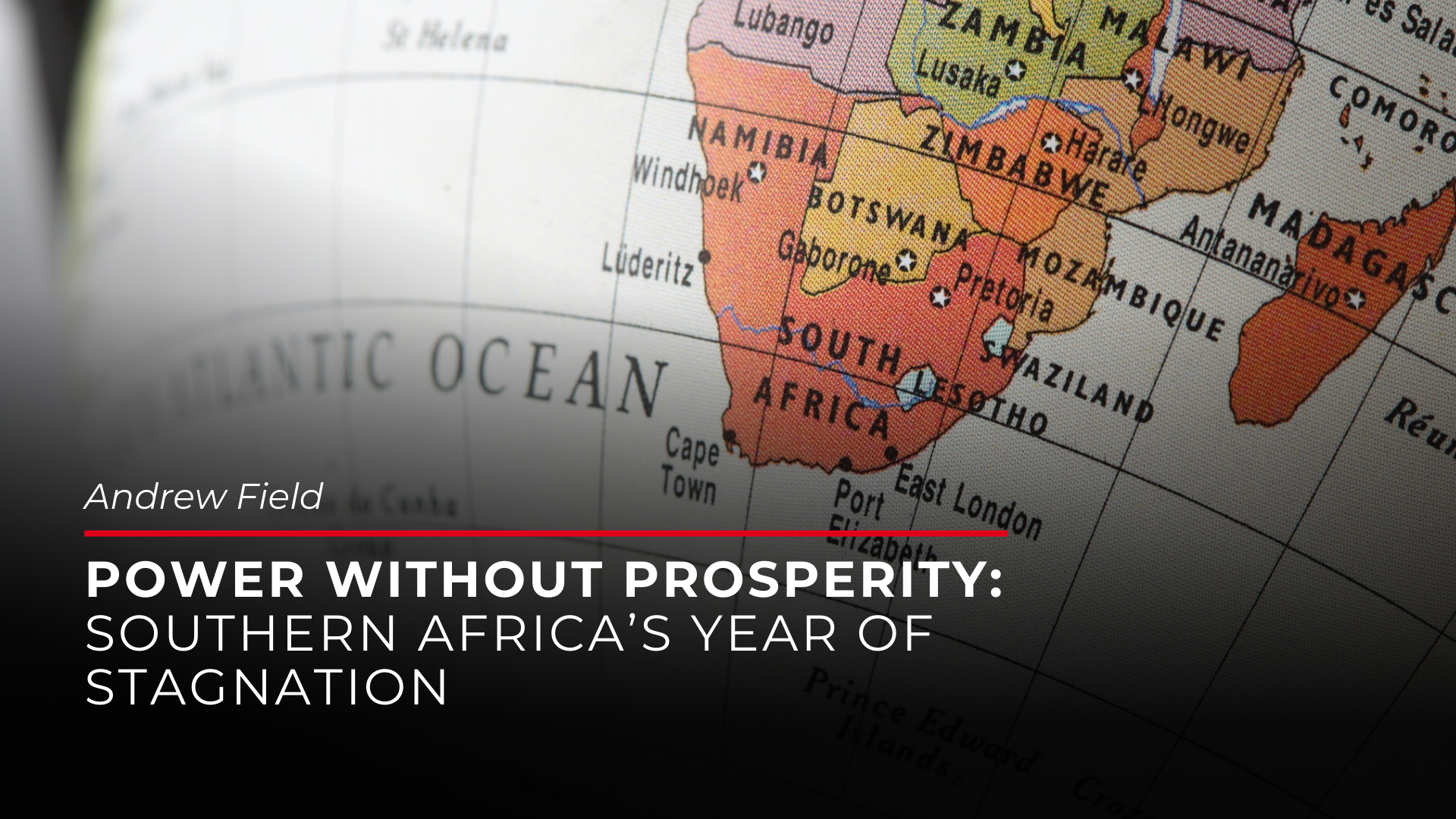
Southern Africa in 2025 was a region still caught in its own contradictions. Governments spent the year juggling conflict, corruption dressed as governance, and the maintenance of power, while economies remained starved of growth. Cumbersome, intrusive bureaucracies became ever more burdensome on the citizenry. The rust kept eating away at the metal. Citizens saw little improvement in their daily lives, even as leaders spoke of reform and resilience. The irony was constant. Politics eclipsed economics, and the promise of prosperity was once again deferred.
Mozambique’s Cabo Delgado remained a grinding insurgency. SADC’s mission provided military support, but funding shortfalls and operational fatigue limited effectiveness. Humanitarian aid declined, leaving hundreds of thousands vulnerable. The LNG projects that were meant to transform Mozambique’s economy stayed hostage to insecurity. The irony is sharp. A resource meant to deliver prosperity instead fuels conflict and corruption. Mozambique’s future remains tied to whether governance can match military pressure. The drift towards a failed state seems inexorable.
In the Democratic Republic of the Congo, eastern provinces continued to destabilise the wider region. Armed groups undermined communities and spilled insecurity across borders. Minerals that should have been a source of wealth became the currency of war. The irony is familiar. Abundance breeds poverty when governance collapses. Regional diplomacy offered little more than words, while humanitarian crises deepened. Southern Africa cannot insulate itself from Congo’s instability, yet its response remains piecemeal.
Zimbabwe’s story was one of political continuity masking economic decay. The government clung to power, projecting stability, yet the economy remained trapped in cycles of inflation, masked by manipulated figures, currency fragility, patronage, and corruption. Road infrastructure is collapsing, the rail-system has collapsed. Citizens endured shortages and declining services while elites consolidated control and indeed great wealth. The irony is bitter. A country once described as the breadbasket of the region now imports food. The breadbasket now buys bread. Political theatre continues, but economic reality bites harder each year. Without structural reform and genuine accountability, 2026 will look much like 2025.
Malawi entered the year with a budget humorously themed around resilience and inclusivity. Yet trade deficits and falling purchasing power constrained ambition. Structural reforms were promised, but fiscal space was narrow. The government’s rhetoric of transformation collided with economic reality. Citizens remained sceptical. The irony is evident. A nation that speaks of inclusivity cannot deliver it when its economy is shrinking. Malawi’s recovery hinges on fiscal discipline and external financing credibility.
By regrettably low regional and continental standards, Zambia offers a glimmer of light; politically stable, a working multi-party democracy, a functional judiciary, copper prices continue to climb boosting business optimism, commercial agriculture is growing, and property rights are protected, but corruption and an oversize public sector continues to suck the fiscus dry and inhibit private sector growth.
Tanzania projected GDP growth above six percent, they say, driven by tourism and infrastructure. Yet political turbulence and authoritarian consolidation cast shadows over investor confidence. Growth without comfort. That is the paradox. The economy expands, but governance signals erode trust. Investors hesitate, citizens question legitimacy, and the promise of prosperity is undermined by politics. Tanzania’s future depends on whether its leaders can stabilise politics enough to let the economy breathe.
Mauritius cooled from 5.6 percent growth in 2024 to around four percent in 2025. This was framed as prudence rather than failure. Services and investment quality remained strong, showing that stability can look like stagnation but is in fact resilience. Mauritius demonstrates that governance maturity can deliver sustainable outcomes. Yet even here, global headwinds and regional fragility weigh heavily. Success looks modest, but modest success is still success. Mauritius remains the exception rather than the rule.
South Africa unveiled new strategies for security and intelligence, promising reform after years of dysfunction. Yet organised crime networks entrenched during state capture continue to thrive. The Investigating Directorate Against Corruption was made permanent, a step forward, but prosecutions remain slow. Hosting the G20 was a symbolic triumph, marred only by a US boycott that underscored diplomatic fractures. South Africa’s paradox is clear. Global leadership optics against domestic fragility. A state that can host the world struggles to deliver electricity to its own citizens.
Across the region, democracy and governance showed signs of strain. Citizen satisfaction declined even in Africa’s best-performing democratic subregion. Service delivery failures, corruption, and inequality eroded legitimacy. Governments maintained power, but often at the cost of public trust. Southern Africa’s democracies are best in class regionally, yet internally fragile. Being the best in a weak field is no comfort to citizens who demand more. Without tangible improvements in justice and services, legitimacy will continue to erode.
There were diversions worth noting. Africa’s leaders spoke more loudly about the dream of a continental currency, and dear sovereignty, a bold step meant to reduce reliance on the US dollar. In reality, it was little more than theatre. Sovereignty was polished into a fig leaf, dazzling the gullible while queues lengthened for basic staples. Local notes lost value even as grand visions of a unified currency were paraded in communiqués and conference halls. The irony is delicious. A continent imagining monetary independence while daily life remains tethered to the dollar.
Chinese influence continued to expand across Southern Africa. Mining concessions, infrastructure projects, and debt exposure tied governments closer to Beijing. The irony is that Chinese capital arrives dressed as development, but leaves behind dependency and political leverage. There is Mandarin laughter all the way to the bank; an imported chuckle at the gullibility of African governance. Governments welcome Trojan investment, but citizens question whether sovereignty is being traded for short-term cash. Southern Africa’s resources are exploited twice over; first by local corruption, then by external actors. The region’s leaders speak of independence, yet their economies remain vulnerable to foreign control. Back door colonialism is alive and well.
Other themes added texture. Climate rhetoric grew louder, with governments promising green growth and renewable energy. Yet coal and oil remained dominant, and infrastructure theft undermined even conventional supply. Digital governance was celebrated, but cybercrime and weak regulation meant the digital frontier was more exploited than protected. But the grand march toward muzzling free speech and its critics suddenly trip over it own shoelaces. Leaders spoke of a youth dividend, yet unemployment and migration showed that the dividend was being squandered. Each diversion carried its own irony. Ambition without delivery. Promise without proof.
The prognosis for 2026 is sobering. Conflict theatres will continue to drain resources. Citizen dissatisfaction will rise unless service delivery and justice outcomes improve. Growth will remain modest. Mauritius will steady, Tanzania may sustain if politics stabilise, Malawi’s recovery hinges on fiscal discipline, and South Africa’s growth will stay fragile as it grates against Washington. Zimbabwe will remain trapped in its hegemonic cycle of liberation politics and decay. Currency credibility will improve only where enforcement and integrity are visible. Chinese influence will deepen. The rust will keep eating away at the metal. Politics will continue to eclipse economics. Another year of failure. Another year of deferred promise, of heavy deterioration, foolhardy rhetoric and the suppression of growth
Remember a link to my blog, if you don’t mind…
Andrew
With sincere best wishes,
Andrew D Field
Telephone +263 772 129215 (mobile – including WhatsApp) VoIP: +263 (0) 867 711 1437 (working hours).
Wish I was out doing what I like to do http://wildfieldphotography.wordpress.com/
Discover more from Africa Unauthorised
Subscribe to get the latest posts sent to your email.
